


What Is a Copper Warrant? How Copper Ownership Actually Works (LME Guide)
Learn what a copper warrant is, how the LME warehouse system works, and how real copper ownership is transferred globally.
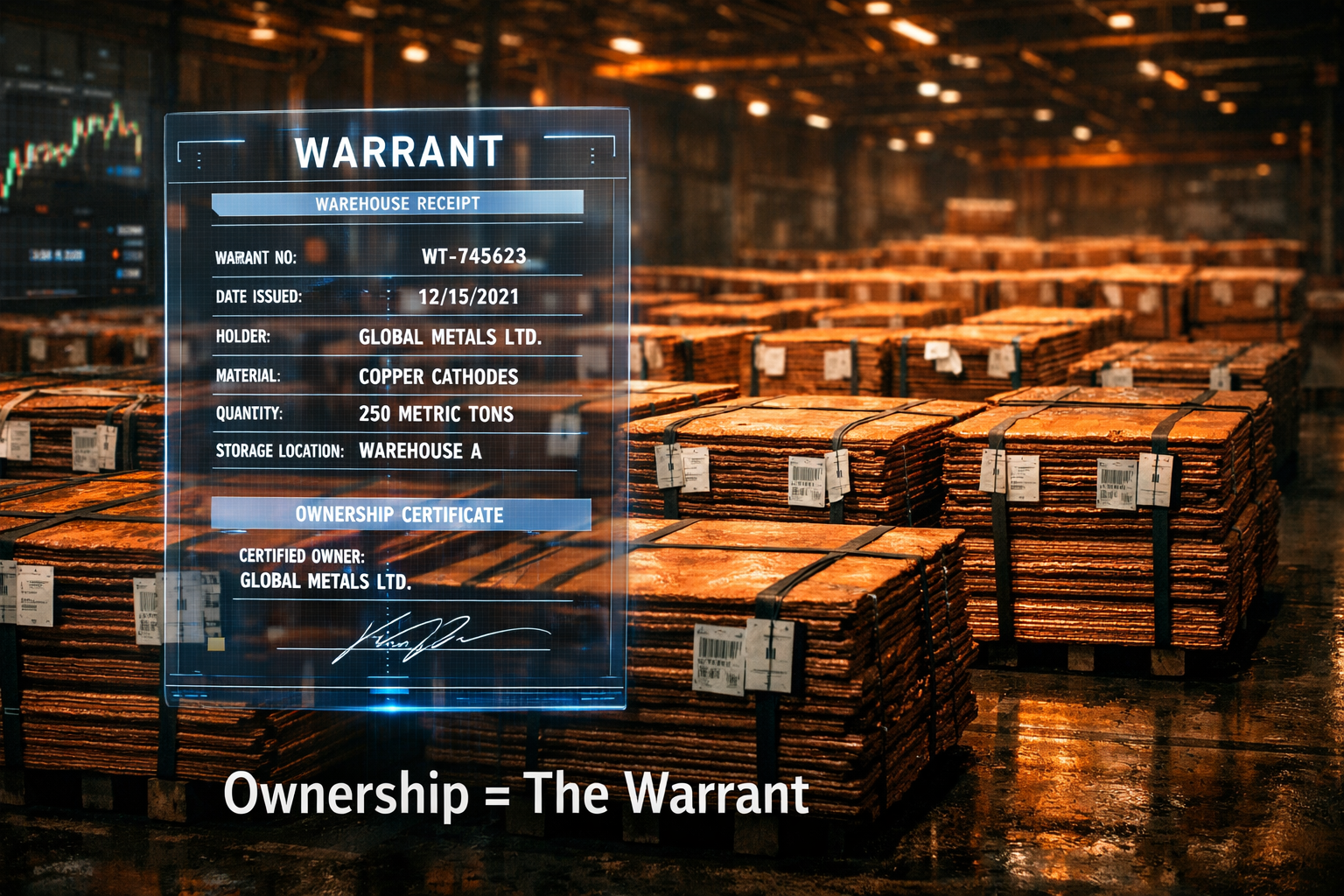
What Is a Copper Warrant? (How Copper Ownership Really Works)
Introduction
Most investors exploring copper quickly encounter a term that is rarely explained clearly: the copper warrant. While widely used in institutional markets, it remains largely misunderstood outside of commodity trading circles. Yet, this single concept sits at the core of how copper is actually owned and traded globally.
Unlike financial assets such as stocks or ETFs, copper is a physical commodity. Ownership is not recorded through brokerage accounts or fund units, but through structured systems tied to real metal stored in approved facilities. This is where copper warrants come into play.
At the center of this system is the London Metal Exchange (LME), which standardises the global copper market. The LME ensures that copper meets strict quality requirements and is stored in authorised warehouses, allowing it to be traded efficiently without physically moving the metal each time ownership changes.
Understanding what a copper warrant is and how it functions provides a clear window into how the real copper market operates. It also reveals why institutional participants rely on physical systems rather than financial products when transacting in copper.
What Is a Copper Warrant?
A copper warrant is:
A document of ownership for a specific quantity of physical copper
It represents:
Verified LME-grade copper
Stored in an approved warehouse
Ready for delivery or transfer
Instead of moving copper physically:
Ownership is transferred via the warrant
How the LME Warrant System Works
The London Metal Exchange created this system to make global metal trading efficient.
The process:
Copper is produced and refined
Delivered to an LME-approved warehouse
Inspected and verified
A warrant is issued
The warrant can then be traded
The metal stays in place
Only ownership changes
What Does a Copper Warrant Include?
A warrant contains key details about the metal:
Warehouse location
Brand (e.g. approved LME producers)
Weight
Quality (Grade A copper cathode)
Ownership record
This ensures:
Standardisation
Trust
Liquidity in global markets
Why Copper Warrants Exist
Without warrants:
Every trade would require physical delivery
Logistics costs would be high
Trading would be slow and inefficient
Warrants allow:
Instant transfer of ownership
Global liquidity
Standardised trading
On-Warrant vs Off-Warrant Copper
This is a key concept.
On-Warrant
Registered with the LME
Available for immediate delivery
Fully tradable
Off-Warrant
Stored privately
Not immediately deliverable
Outside LME system
On-warrant copper is what drives:
global pricing and liquidity
How Copper Is Traded Without Moving Metal
In most transactions:
Copper stays in the warehouse
Buyers and sellers exchange warrants
This means:
A single batch of copper can change hands multiple times
Without ever leaving storage
Why Warrants Matter for Investors
Most investors never interact with warrants.
Instead, they:
Buy ETFs
Buy mining stocks
But institutional participants:
Trade warrants directly
Because:
It represents real ownership
It aligns with physical supply/demand
How Warrants Relate to Copper Pricing
Copper prices are tied to:
LME spot price
Supply/demand
Inventory levels
Warrants reflect:
Real available supply
When inventories fall:
Prices tend to rise
Can Individual Investors Access Copper Warrants?
Historically:
No
Reasons:
Large contract sizes (25 metric tonnes)
Institutional access only
Complex systems
However:
New models are emerging
Smaller allocations are becoming accessible
Ownership is being digitised
The Bigger Picture
Copper warrants are not just technical instruments — they are the foundation of the global copper market.
They allow:
Efficient trading
Standardised ownership
Transparent pricing
Understanding them shifts your perspective from:
Retail investing
To real commodity markets
Frequently Asked Questions
What is a copper warrant in simple terms?
A copper warrant is a document that proves ownership of a specific amount of physical copper stored in a warehouse.
Who uses copper warrants?
Copper warrants are used by:
Commodity traders
Industrial buyers
Financial institutions
Does a copper warrant mean you own real copper?
Yes, a warrant represents ownership of real, physical copper stored in an approved warehouse.
Can copper warrants be traded?
Yes, warrants can be bought and sold, transferring ownership of the underlying metal without moving it physically.
Why don’t most investors use copper warrants?
Because:
Minimum sizes are large
Access has traditionally been restricted
Systems are complex

Get Copper Market Updates
Join investors receiving insights on copper prices, market trends, and opportunities. Free, no spam.
By subscribing, you agree to our Privacy Policy.
Ready to Own Real Copper?
Start owning physical copper today. Simple, transparent, accessible.