


MUST READ Why Mining Stocks, Copper ETFs, and Tokenised Copper Miss the Point
Most investors believe they are gaining exposure to copper through mining stocks, ETFs, or tokenised assets — but these instruments only provide indirect access. Mining stocks expose investors to company performance and operational risks, ETFs track price movements without owning the underlying metal, and tokenised copper introduces additional layers of trust and structure. In each case, the investor is removed from the physical asset itself. In contrast, physical copper ownership aligns directly with how the global copper market actually operates — through real metal stored in warehouses and transferred via systems like the London Metal Exchange. As demand increases due to electrification, EV production, and infrastructure growth, understanding this distinction becomes critical. Platforms like C4CU are bridging this gap by offering access to allocated copper, allowing investors to move closer to the real mechanics of the market rather than its abstractions.
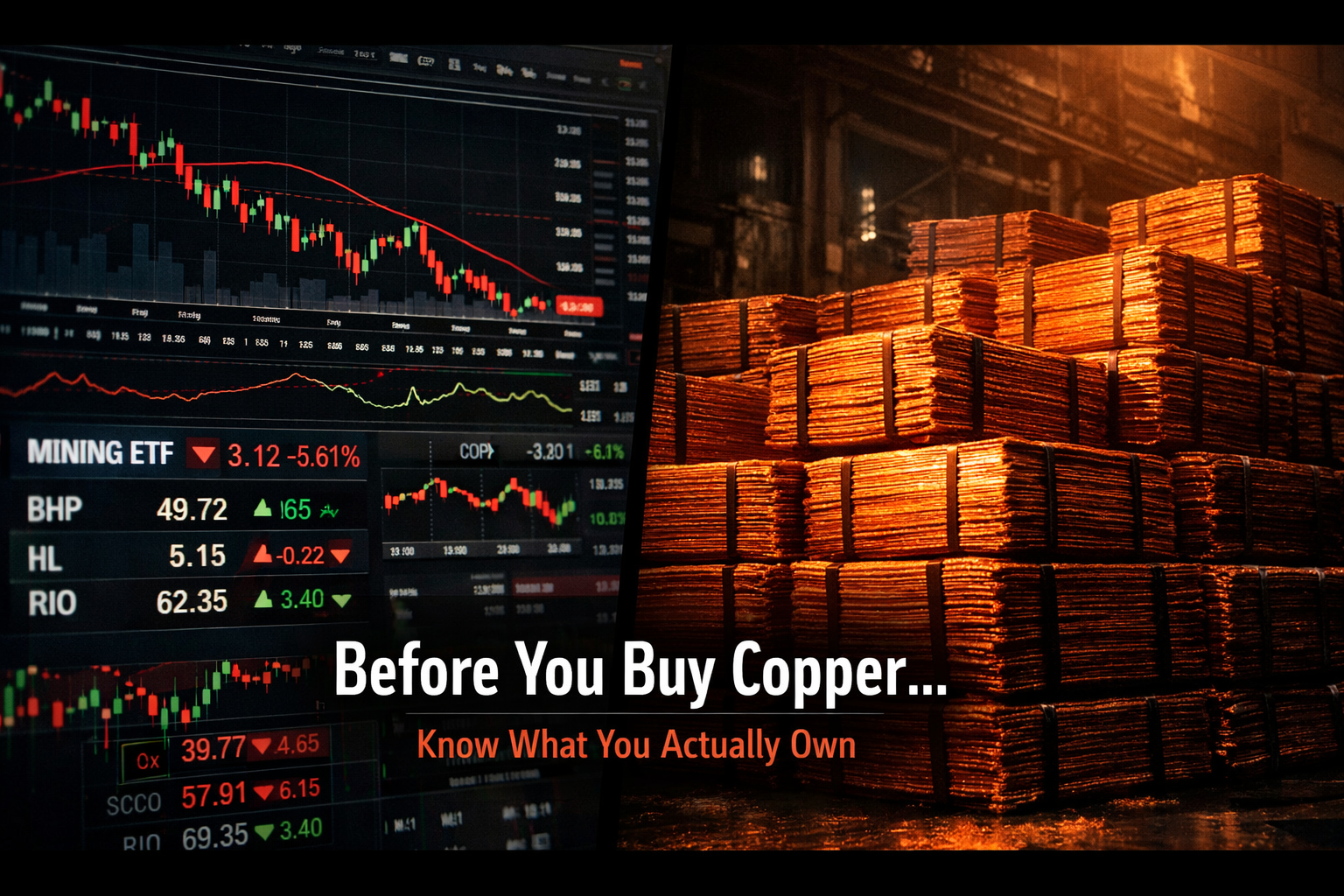
Introduction
Before you buy a copper mining stock, before you click into a copper ETF, and before you even consider tokenised copper — you need to understand one thing:
You are probably not buying copper.
You are buying exposure to something linked to copper.
This distinction is not small it is fundamental. Because while copper is one of the most critical materials in the global economy, most investors never actually touch the layer where copper is truly traded, owned, and valued.
At the institutional level, copper is not a ticker. It is not a narrative. It is not a token. It is physical metal, stored in warehouses, transferred via warrants, and consumed by industry. Platforms like Copper 4 Copper (C4CU) are built around this reality giving access to the underlying asset itself, not just its shadow.
The Illusion of “Copper Exposure”
Most investors believe they have copper exposure when they buy:
Mining stocks
Copper ETFs
Tokenised assets
But each of these introduces layers between you and the actual metal.
1. Mining Stocks You’re Buying a Business, Not Copper
When you buy a mining stock, you are not buying copper.
You are buying:
Management decisions
Operational risk
Political risk (mines are location-dependent)
Cost structures
Debt
Copper price might help but it is not the only driver.
A copper mining company can underperform even when copper prices rise.
2. Copper ETFs You’re Tracking Price, Not Owning Metal
ETFs are designed for accessibility, not accuracy.
They track:
Futures contracts
Rolling positions
Market pricing
But they do not give you:
Ownership of physical copper
Exposure to real inventory
Control over actual supply
You are exposed to the idea of copper — not the asset itself.
3. Tokenised Copper The Illusion of Ownership
Tokenised copper sounds modern. It sounds efficient.
But it introduces a new layer of risk:
Who holds the underlying copper?
Is it actually allocated?
Can it be redeemed?
Is liquidity real or synthetic?
You are now trusting:
A platform
A structure
A promise
Instead of owning metal.
How Copper Actually Works in the Real World
At the core of global copper trading is the London Metal Exchange.
This is where real copper is standardised, priced, and traded.
Copper in this system:
Exists physically
Is stored in approved warehouses
Is transferred via warrants (ownership documents)
A warrant represents:
Real copper
In a real warehouse
Owned by a real entity
This is how institutions operate.
Why Physical Copper Wins
Let’s break it down simply.
Physical Copper Gives You:
Direct exposure to the asset
Alignment with real supply and demand
No dependency on third-party performance
No abstraction layers
Everything Else Adds Layers
The Supply Reality Most Investors Ignore
Copper is not like gold.
Gold is stored.
Copper is consumed.
That means:
Supply matters more
Logistics matter more
Inventory matters more
As demand rises from:
EV production
AI infrastructure
Grid expansion
Physical copper becomes more important not less.
The Institutional Advantage
Institutions don’t:
Buy ETFs
Speculate on tokens
They:
Secure supply
Hold inventory
Trade warrants
They operate in the real layer of the market.
Where C4CU Fits In
Copper 4 Copper (C4CU) is built around a simple shift:
From tracking copper → to owning copper
Instead of requiring:
25 metric tonnes
Warehouse access
Institutional infrastructure
C4CU offers:
Allocated copper
Smaller entry points
Ownership linked to real metal
👉
This is not a new system.
It is access to the existing one.
The Core Insight Most People Miss
Most investors ask:
“Will copper go up?”
The better question is:
“What exactly do I own when I invest in copper?”
Because the answer is often:
Not copper.
The Shift That’s Coming
As markets evolve, investors are moving toward:
Real assets
Direct ownership
Supply driven investments
Copper sits at the centre of this shift.
Not as a trade.
But as infrastructure.
Conclusion
Mining stocks, ETFs, and tokenised copper all serve a purpose.
But they are not the same as owning copper.
They are layers built around copper.
Physical copper is the foundation.
Everything else is a derivative of it.
So before you invest, ask yourself:
Are you buying copper or just something that moves like it?
,
,
,
,
,
,
,
,
,
,
,
,
,
,
,
,
,
,
,
,
,
,
,
,

Get Copper Market Updates
Join investors receiving insights on copper prices, market trends, and opportunities. Free, no spam.
By subscribing, you agree to our Privacy Policy.
Ready to Own Real Copper?
Start owning physical copper today. Simple, transparent, accessible.